
7 dining room home decor ideas for everyday living
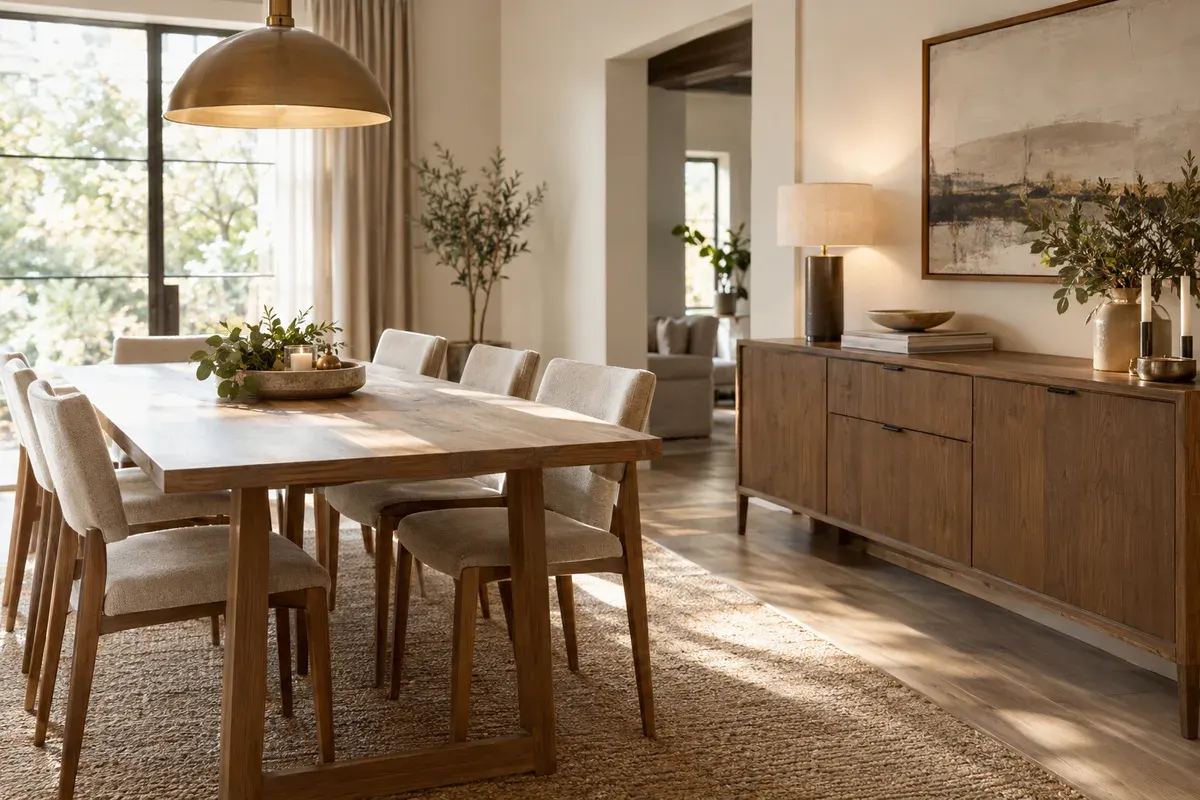
The most useful dining room home decor ideas combine layered lighting, a generously sized rug, practical storage and simple table styling. Start with enough room to move chairs comfortably, then add a pendant or rechargeable lamp, a sideboard, a mirror and a restrained mix of colour and texture.
Key takeaways
- Allow at least 90 cm around the seating sides of a dining table.
- A dining room rug should hold the chairs when they are pulled out.
- Low centrepieces keep conversation and shared dishes unobstructed.
- Rechargeable table lighting adds an evening light source without a trailing cable during use.
- The Mira Rechargeable Table Lamp costs £24.90 and provides adjustable light.
In this article
- How do you choose dining room decor that works?
- Which lighting ideas make a dining room feel cosy?
- What decor works best in a small or busy dining room?
- How can colour and table styling update a dining room?
- What are the latest dining room decor trends?
- Delivery and returns
- Which dining room idea should you start with?
- Frequently asked questions
The most common dining room decorating mistake is choosing attractive pieces before allowing enough space for chairs, people and serving dishes. Get the layout comfortable first, then use lighting, storage and a few decorative details to make the room feel inviting rather than crowded.
VELANOR
How do you choose dining room decor that works?
Choose dining room decor against three criteria: available space, everyday use and the atmosphere you want after dark.
- Space: allow at least 90 cm of clearance on each seating side of the table. Measure from the table edge to the nearest wall or furniture, not simply to the edge of the room. Busy routes behind occupied chairs benefit from additional space.
- Everyday use: decide whether the table mainly hosts meals, homework or occasional gatherings. A frequently used family table needs a clear surface and nearby storage more than a permanent decorative display.
- Evening atmosphere: plan a main light for the whole table and a softer secondary source. Materials and paint colours can look noticeably different once daylight fades.
For a small first addition, our Mira Rechargeable Table Lamp costs £24.90 and provides adjustable light wherever you need it. It is one of seven ideas below, grouped by the problem each solves.
Prices as of November 2026.

Which lighting ideas make a dining room feel cosy?
A rechargeable table lamp and a well-positioned pendant create a useful combination of intimate light and broader illumination. They suit different moments: a pendant helps with serving and clearing, while a smaller light softens the room during a relaxed meal.
Warm white light, around 2,700 K, is a familiar choice for a comfortable dining atmosphere. Dimming is useful where the fitting and light source are compatible. Our lighting collection offers lighting for the home.
1. Mira Rechargeable Table Lamp, for flexible evening lighting
Our Mira Rechargeable Table Lamp is £24.90 and gives you adjustable light wherever you need it. Its rechargeable format makes it a practical option for bringing light to a dining table without a trailing power cable during use.
Place it towards one end of a rectangular table, leaving the centre available for food. On a smaller table, it can become the main decorative object rather than competing with a vase and candles.
Best suited to: multipurpose dining spaces and people who want to change the mood without changing a ceiling fitting. Keep the lamp out of the serving area so hands and dishes can move freely.
2. A table-centred pendant, for a defined dining zone
A pendant creates a visual centre above the table, especially in an open-plan kitchen where the dining area needs its own identity. An opaque metal shade directs more light downwards; an opal glass shade spreads it more diffusely.
As a starting point, hang the bottom of the fitting about 75 to 90 cm above the tabletop, adjusting for the shade's shape and seated sightlines. Centre it over the table rather than automatically using the middle of the ceiling.
Best suited to: a table that stays in one position. For a fixed electrical fitting, use a qualified electrician to install it and assess the ceiling support. A pendant should illuminate faces and food without putting a bright bulb directly in diners' eyes.
What decor works best in a small or busy dining room?
A correctly sized rug, shallow storage and a carefully positioned mirror can make a compact dining room more comfortable without filling every spare corner. Keep the main walking route clear, then give each addition a specific job.
3. A flatweave rug, for a softer and more defined dining area
A dining rug defines the table area and softens the sound of a room with hard flooring. Flatweave and low-pile designs let chair legs move more easily than deep, fluffy piles, making them useful for frequently used dining spaces.
Allow roughly 60 to 75 cm of rug beyond each table edge so chairs remain on it when pulled out. A 160 × 90 cm table therefore needs approximately 280 × 210 cm at the smaller end of that allowance. The chair footprint matters as much as the tabletop.
Best suited to: open-plan rooms and dining areas that sound echoey. A subtle pattern is forgiving around everyday crumbs; tightly woven wool and synthetic fibres offer different balances of texture and ease of care.
4. A shallow sideboard, for useful storage and a display surface
A sideboard gives table linen, placemats and serving dishes a home close to where they are used. Closed cupboards keep the view calm, while drawers are helpful for smaller items that otherwise spread across the tabletop.
In a narrow room, a unit around 35 to 40 cm deep can preserve more floor space than a deeper cabinet. Include its handles and open doors in the layout, not just the cabinet body. Oak and oak veneer bring visible grain; painted finishes can blend into the wall colour.
Best suited to: dining rooms that double as workspaces. Keep one section of the top clear for serving rather than covering the whole surface with ornaments.
5. One substantial mirror, for reflected light and a clear focal point
A mirror reflects existing light and views, making it useful on a wall opposite or beside a window. One substantial piece often gives a small dining room a calmer focal point than several unrelated decorations.
Above a sideboard, a mirror around two-thirds to three-quarters of the furniture's width usually looks balanced. A timber frame adds warmth; a slim metal frame makes less visual impact.
Best suited to: darker corners and rooms with a pleasant view to reflect. Position it to catch daylight or artwork rather than kitchen clutter, and avoid reflecting a bare bulb at seated eye level.
How can colour and table styling update a dining room?
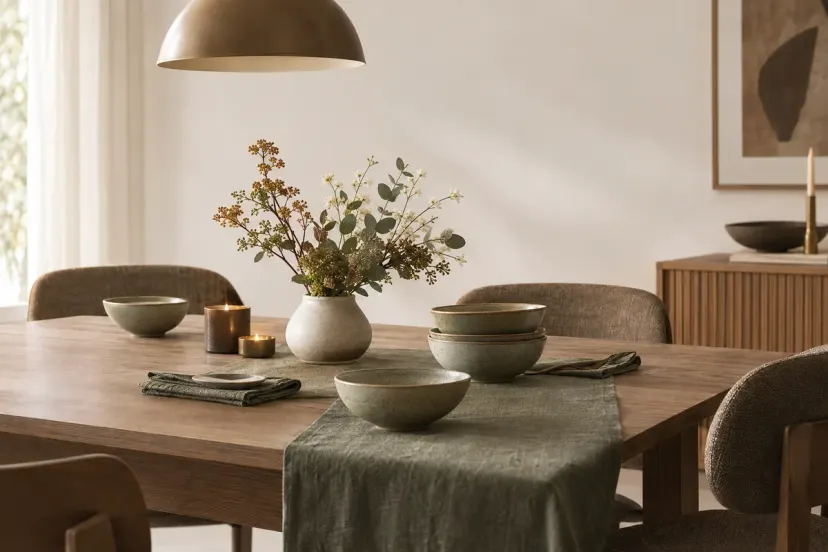
A repeated accent colour and a low, practical centrepiece can refresh a dining room without replacing its main furniture. These are particularly useful changes in rented homes or rooms where the table and chairs already work well.
6. A repeated colour and texture palette, for a coherent room
Choose one main neutral, one accent colour and a small number of recurring materials. Warm white walls, natural wood and olive linen create a softer effect; deep blue, pale timber and brushed metal feel crisper.
Repeat the accent in two or three places, such as artwork, napkins and a ceramic bowl. Texture adds interest without requiring more colours: linen, woven seats and matt pottery sit comfortably together.
Best suited to: rooms with mismatched furniture that needs a visual connection. Our home essentials collection offers practical home essentials. Choose additions for a genuine use rather than filling a space simply because it is empty.
7. A low, movable centrepiece, for an inviting everyday table
A shallow bowl, a low vase or a small tray creates a focal point without turning the dining table into a display shelf. Keep the arrangement low enough for people to see one another comfortably across it.
For everyday meals, one object is often sufficient. For guests, add cloth napkins and a runner, leaving room for shared dishes and water. A round table usually suits one central arrangement; a long table can take two smaller groupings.
Best suited to: households that eat at the table daily. Seasonal stems or fruit can change the look without introducing a completely new set of decorations. Avoid strongly scented flowers or candles beside food.
What are the latest dining room decor trends?
Natural wood, tactile fabrics, sculptural lighting and deeper accent colours are current dining room directions that translate readily into everyday homes. A simple table with a visible wood grain can sit alongside woven seating, a coloured wall or an unusually shaped light without making the room feel busy.
The useful approach is to adopt one direction at a time. Add texture through linen before replacing furniture, or introduce colour through a single wall and matching napkins. Keeping sound furniture and choosing durable additions also reduces unnecessary replacement.
Delivery and returns
We offer free UK delivery on all orders and a 30-day returns policy starting from the date of delivery. Customers are responsible for return postage costs for change-of-mind returns.
Which dining room idea should you start with?
Start with the idea that removes the room's biggest everyday frustration: lighting for a harsh evening atmosphere, storage for a crowded table, or a better layout for awkward chair movement.
In a compact room, prioritise the shallow sideboard or mirror before adding more floor-standing pieces. In an open-plan space, a rug and table-centred pendant give the dining area definition. Where the layout already feels comfortable, the rechargeable lamp, coordinated textiles and a low centrepiece offer smaller changes that still make mealtimes feel considered.
From VELANOR
We offer free UK delivery on all orders. We typically process orders within 1 working day.
Frequently asked questions
How do you decorate a dining room table for everyday use?
Use one low centrepiece, such as a shallow bowl or small vase, and keep the remaining surface available for meals. A washable runner adds colour, while a tray makes a small arrangement easy to move.
What furniture is typically in a dining room?
A dining table and chairs are the essentials, with a sideboard or dresser providing optional storage. A bench can replace chairs on one side, while a console suits rooms that need a narrower serving surface.
What is the ideal height for a dining room pendant above the table?
About 75 to 90 cm between the tabletop and the bottom of the pendant is a useful starting point. The final position should preserve clear sightlines and keep glare out of seated diners' eyes.
How big should a dining room rug be?
Allow roughly 60 to 75 cm of rug beyond every edge of the table. This gives pulled-out chairs a better chance of remaining fully on the rug instead of catching its edge.
Can a floor lamp work in a dining room?
Yes, a floor lamp can provide soft background light beside a sideboard or in an unused corner. Keep its base and cable outside chair movement and walking routes, and use it alongside lighting that reaches the table.
Sources
- What Size Dining Table Do You Need for 4, 6 or 8 Peoplegenzinterior.co.uk
Research and sources from Crush: AI marketing agent
Written with help from AI.
VELANOR
Velanor Living